The problem
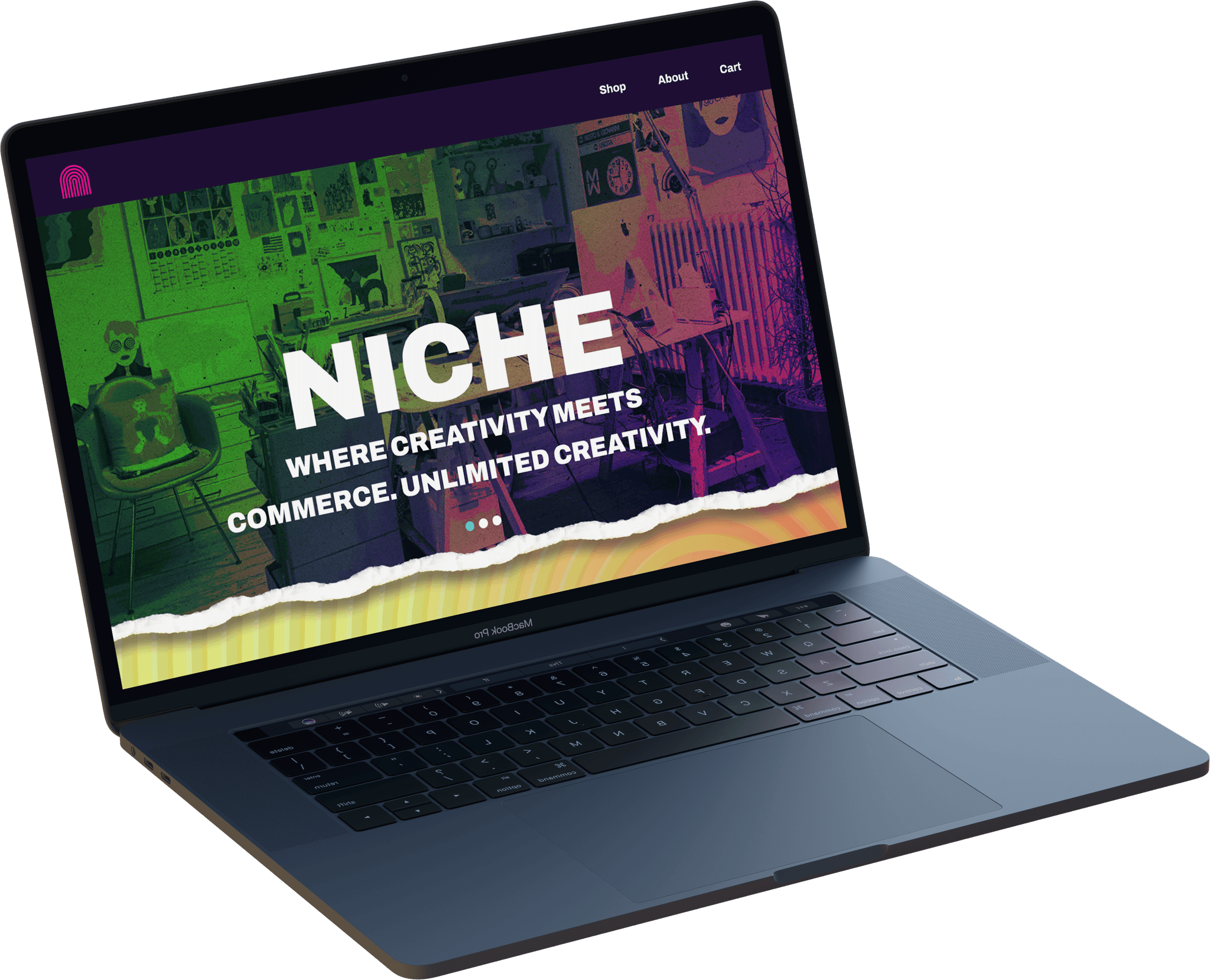
Niche, a Loyola University New Orleans shop selling handmade goods by student and alumni designers, lacked a digital storefront. Previously operating as a pop-up, they needed an e-commerce experience that could scale their reach, build credibility, and position Niche as a leader in New Orleans design.
initial progress
The project began with major unknowns, such as limited access to the client, unclear inventory, and an underdefined brand. This required early decisions to be made with minimal information.
Round 1
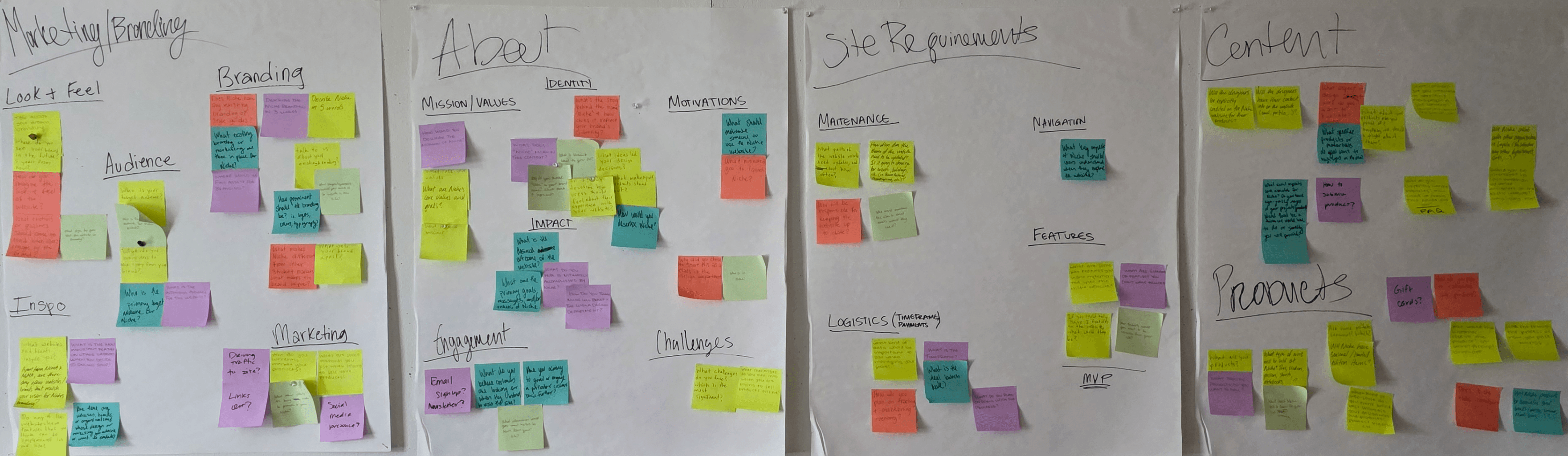
Our team created several questions for our client. Using these questions, we found common themes and could discuss which features were absolutely necessary for an e-commerce site. This allowed us to move forward with wireframes before getting client feedback.
sketches
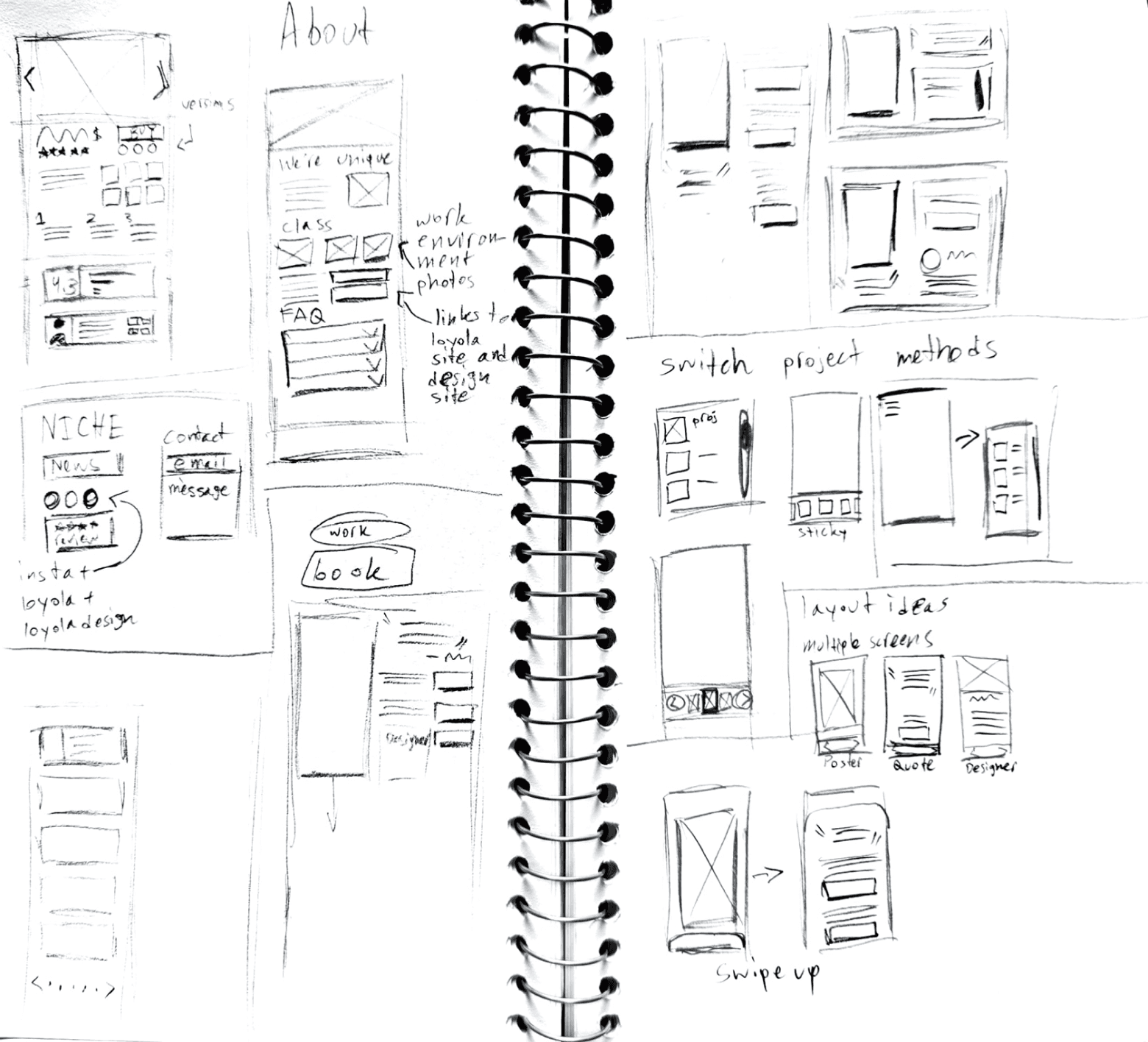
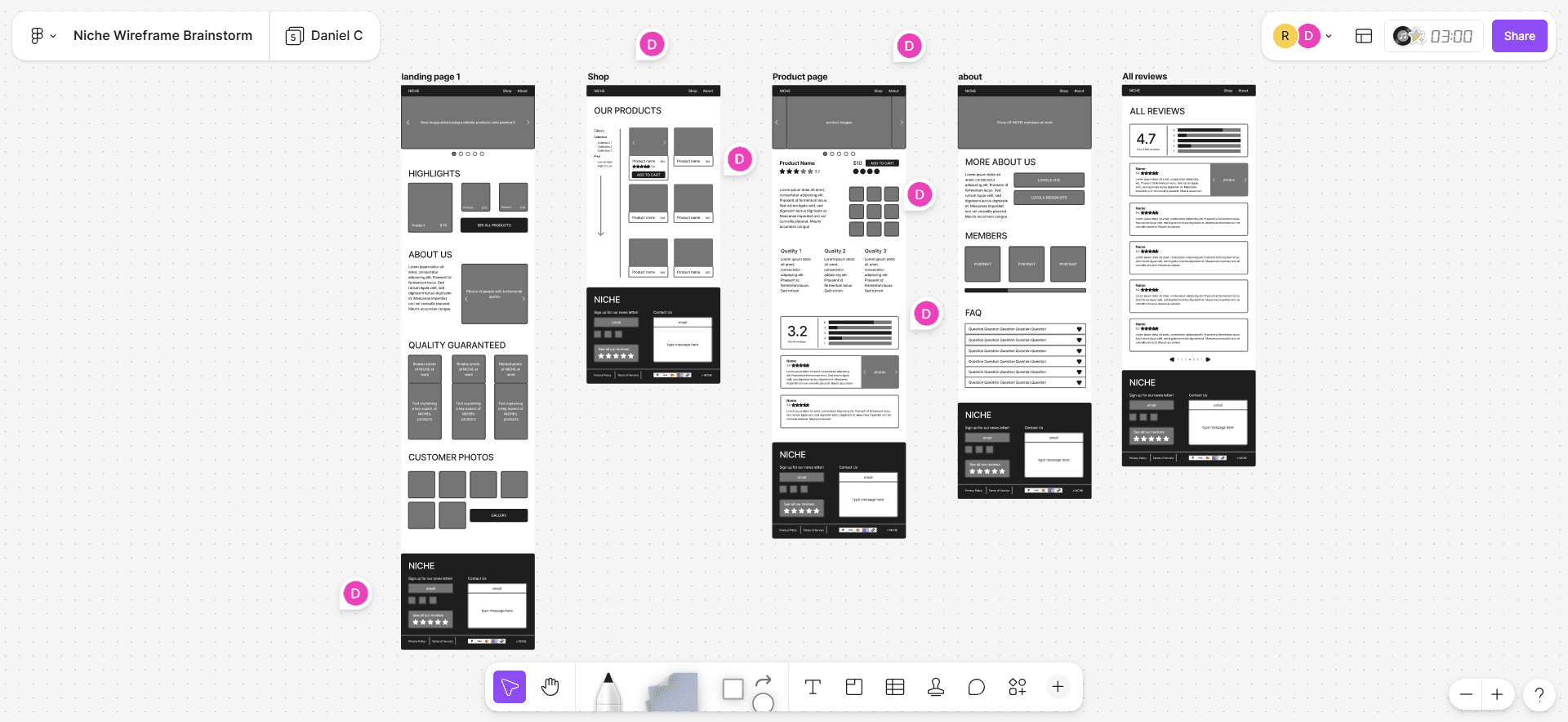
wireframes
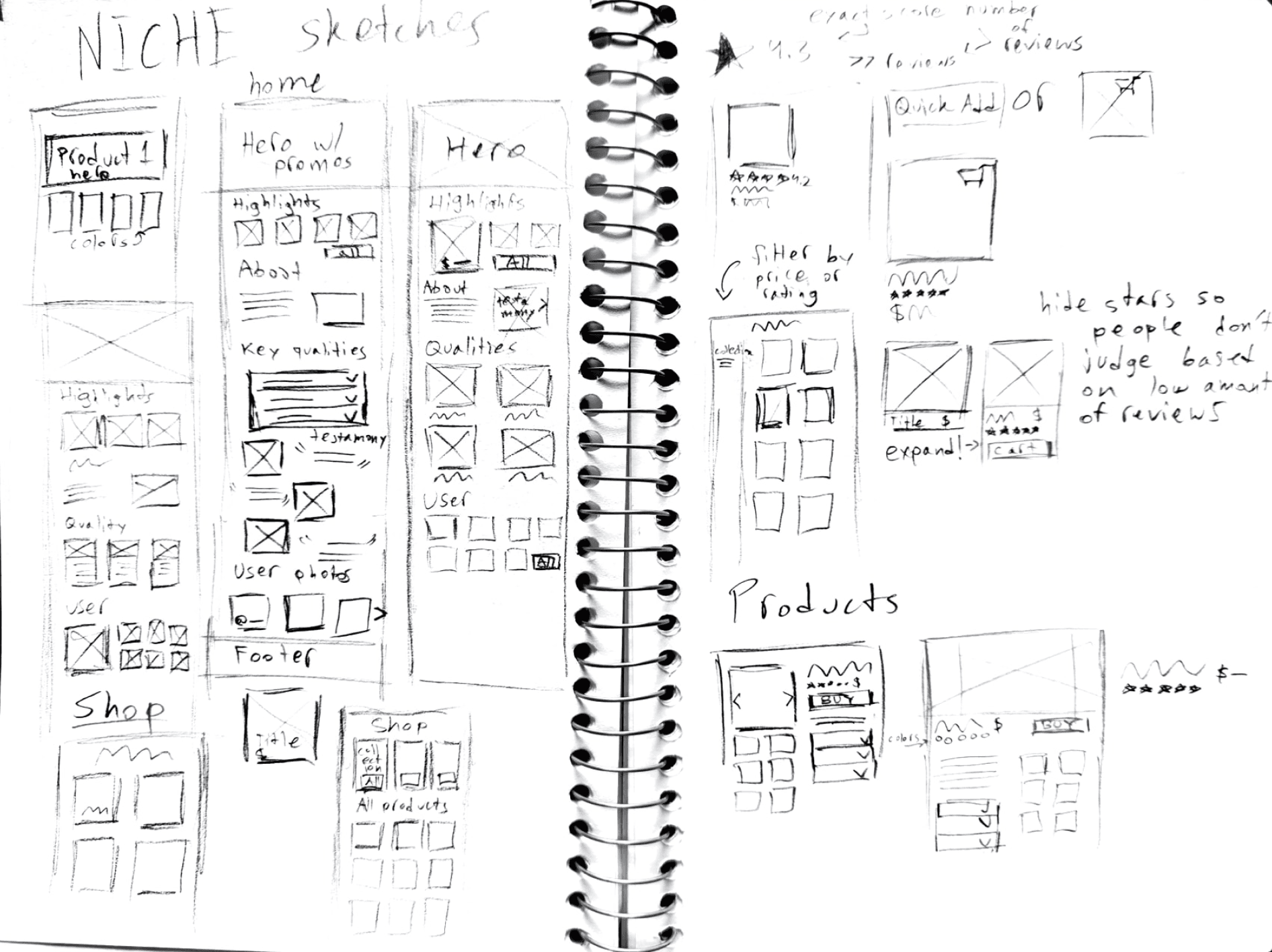
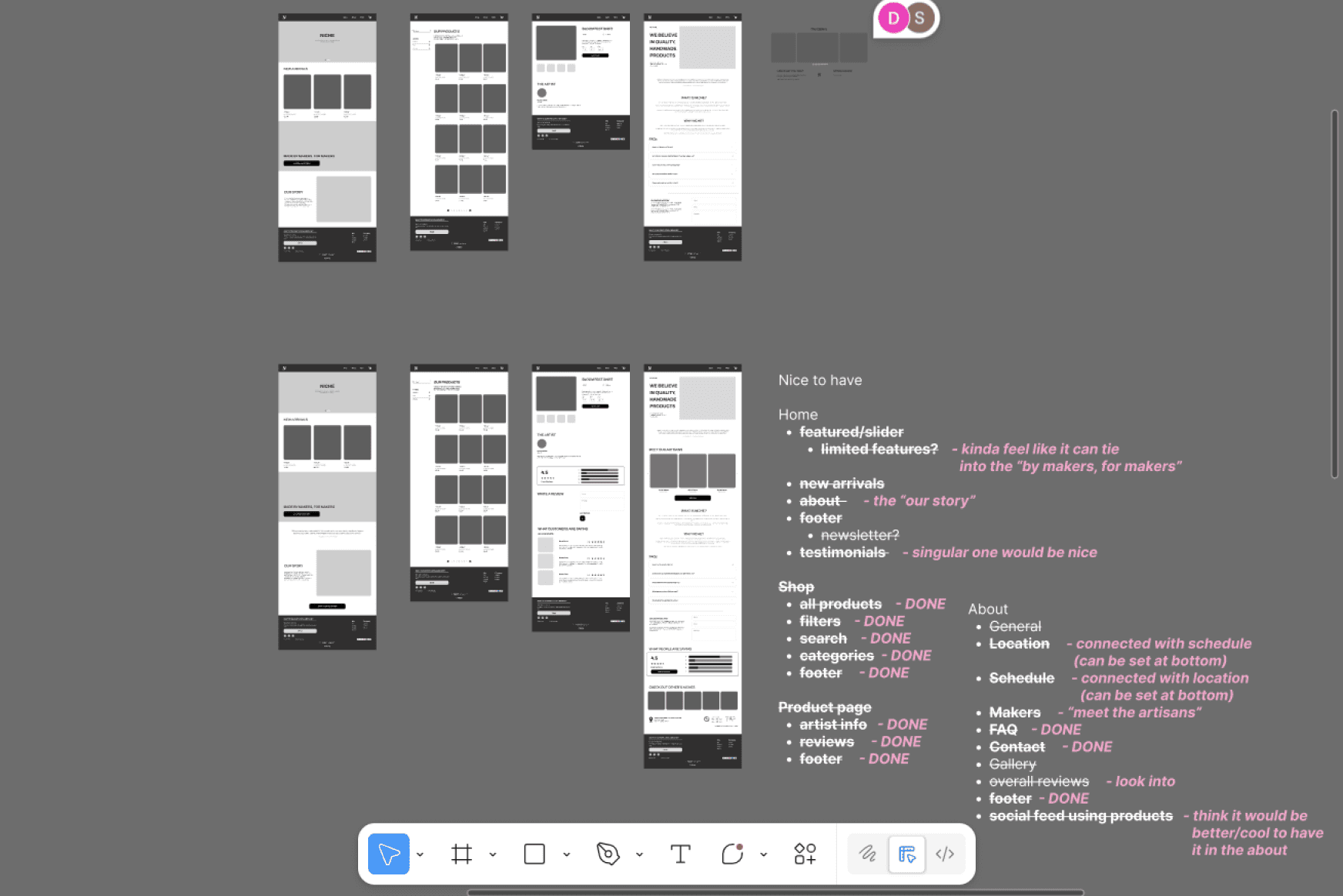
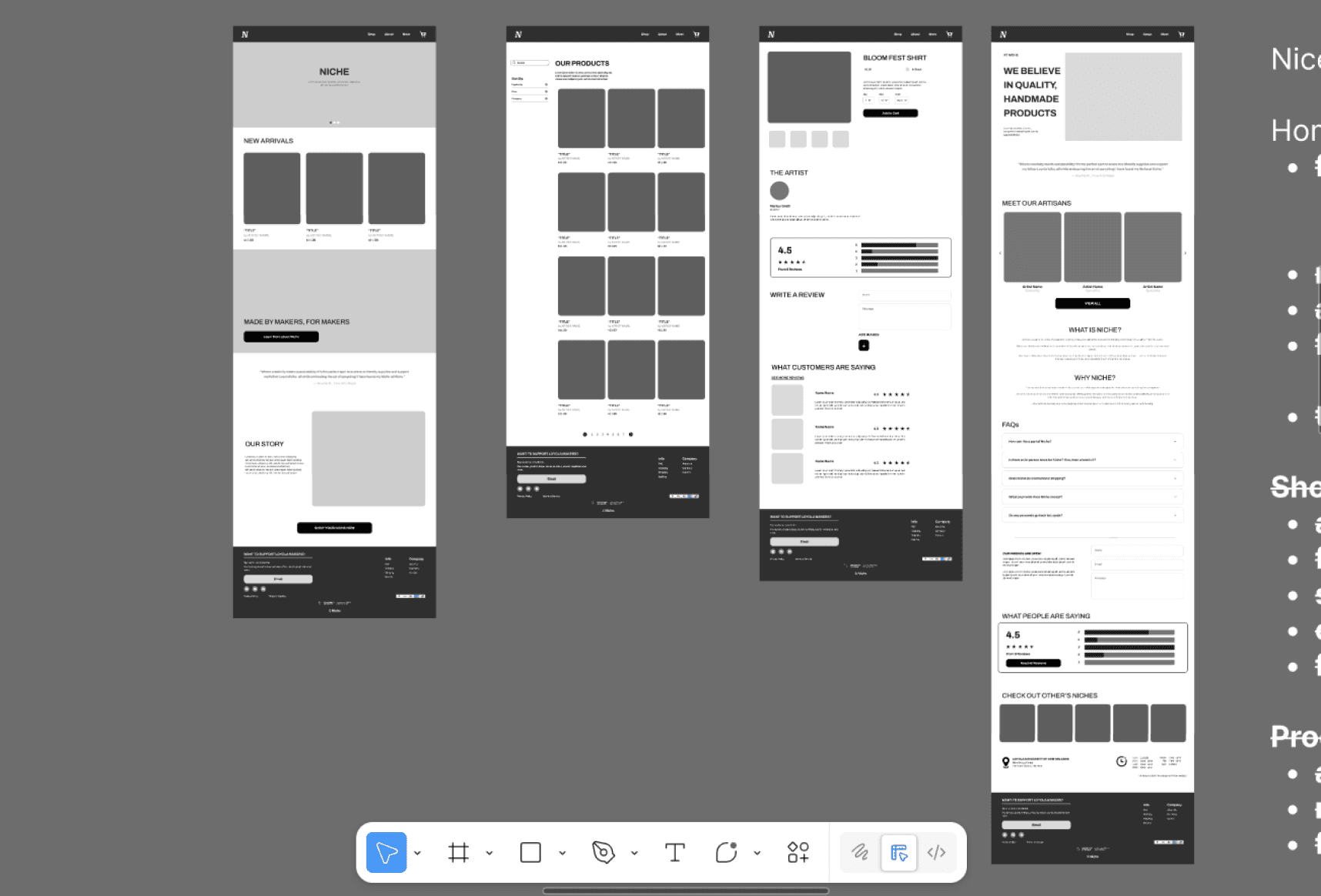
We created individual wireframes and then came together to take the best aspects of each for our final layout.
interview & design direction
Our interview with Professor Daniela Marx clarified both the visual direction and strategic goals for Niche. While we initially worked with assumptions, this conversation grounded the project in a more defined identity. Niche was positioned not just as a shop, but as a representation of design culture at Loyola, requiring a balance between professionalism and creative expression. The emphasis on texture, layering, and a “high-end contemporary” feel validated some of our early explorations while also pushing us to refine how we showcased products and structured content.
Unlike templative e-commerce platforms like Etsy, Professor Marx emphasized pushing Niche’s brand identity while highlighting the designers behind each product.
Key findings
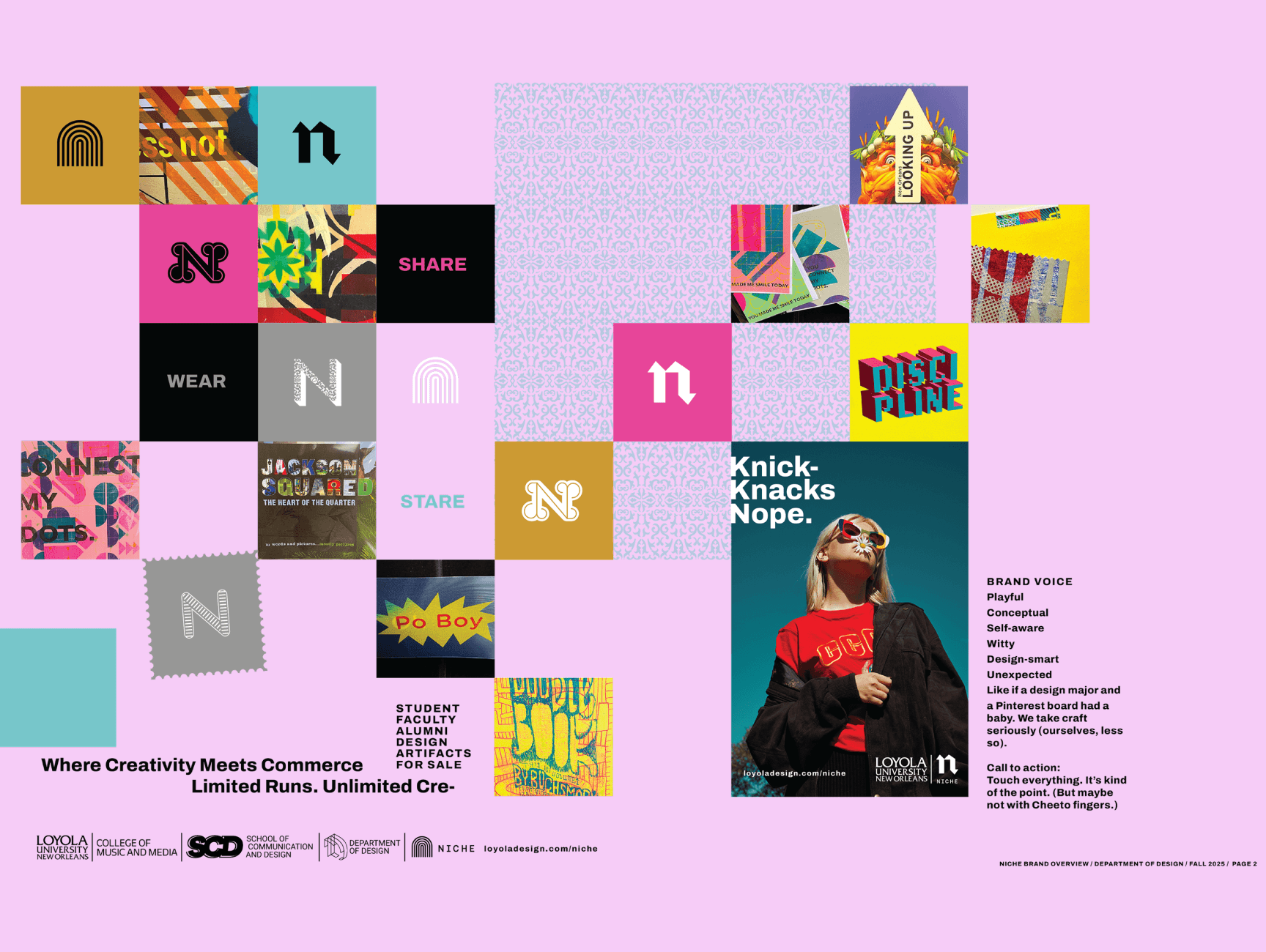
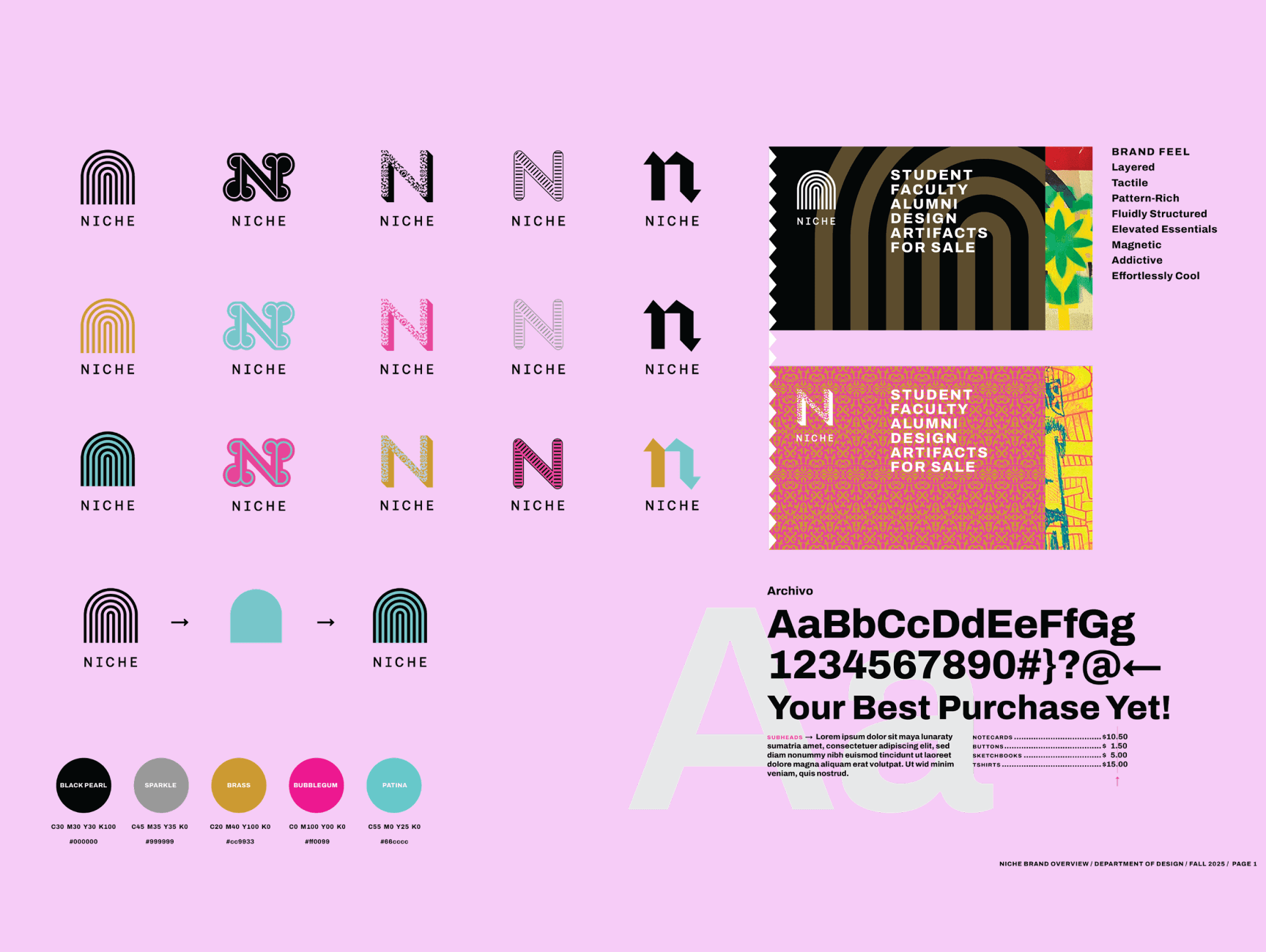
Desired aesthetic: high-end, contemporary, layered, and tactile.
Strong emphasis on pattern, texture, and visual richness.
emphasizing the designers behind each product was crucial.
Multiple logos, colors, and typefaces already established.
Audience includes Loyola affiliates and new orleans tourists.
Product range was broader than expected, requiring clearer categorization
Style guide
exploration
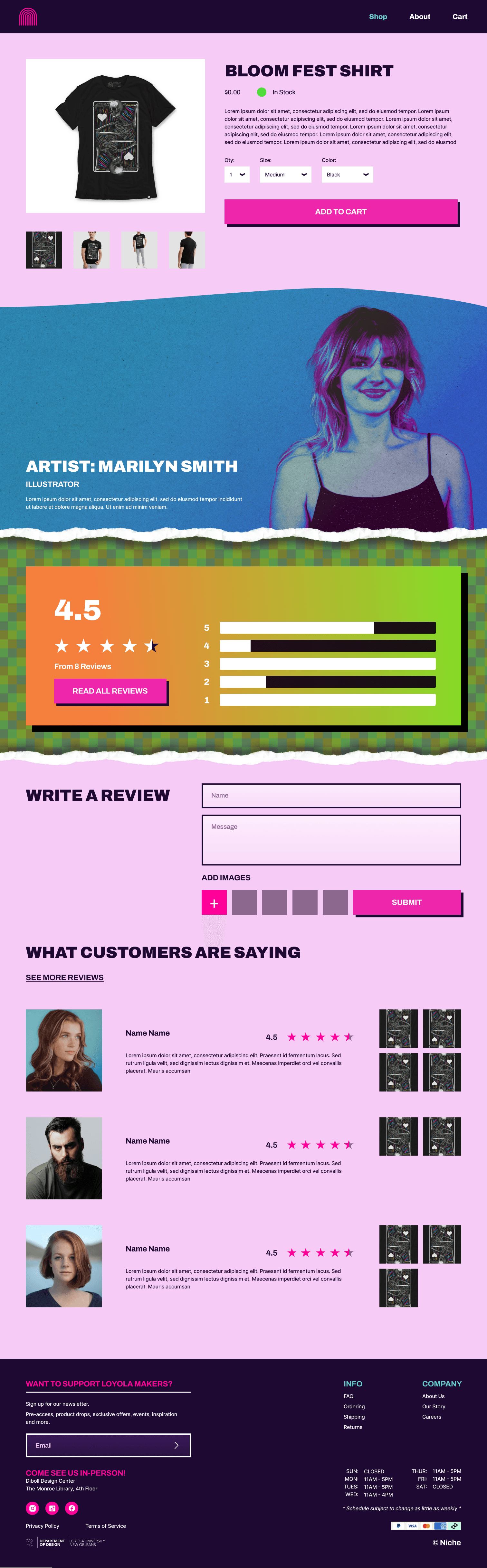
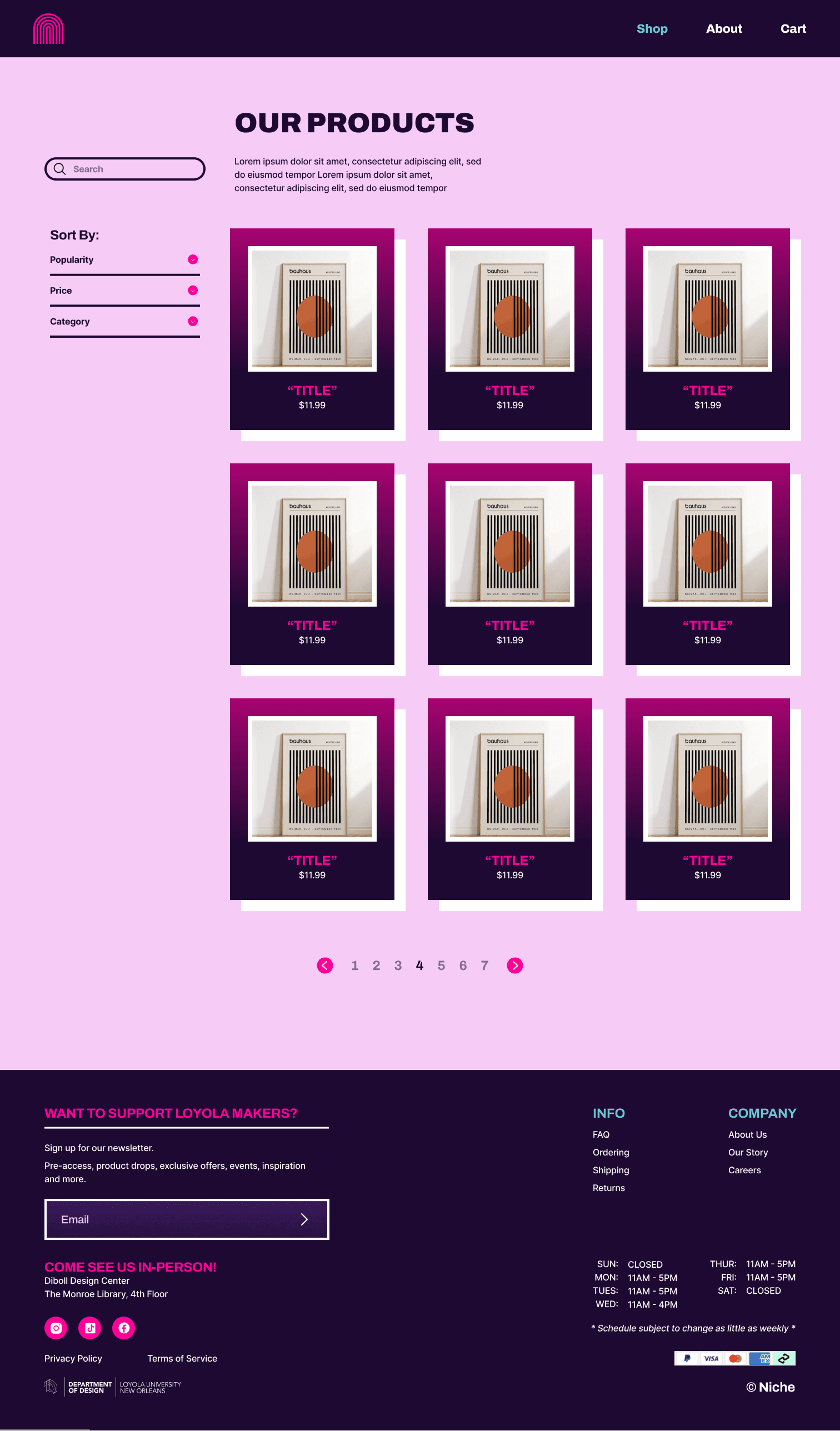
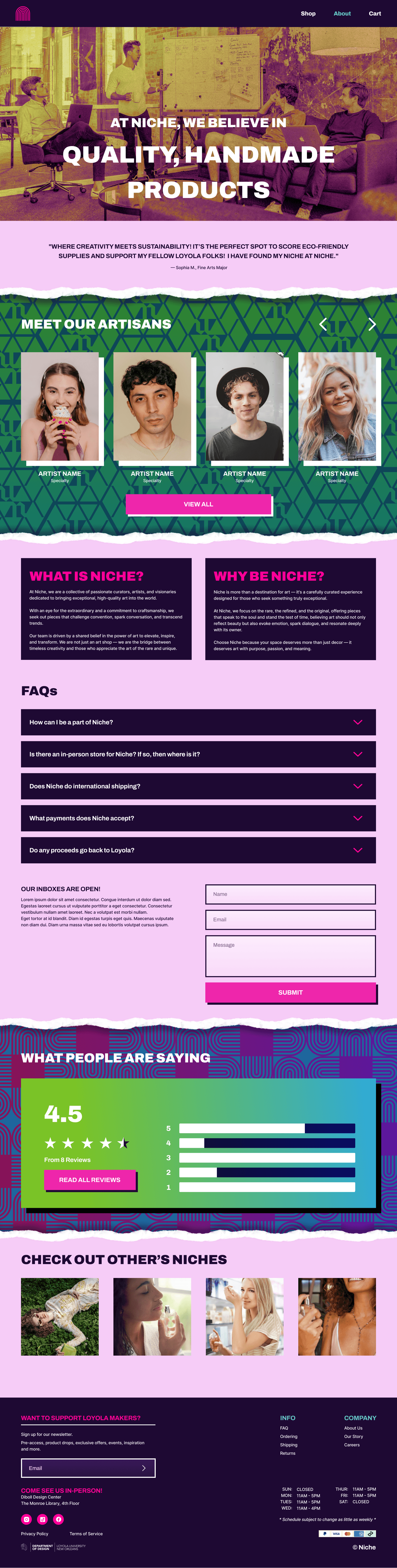
The iteration stage focused on refining the balance between expressive branding and usability through multiple rounds of critique and revision. Each iteration reduced visual noise, strengthened hierarchy, and ensured the design supported both product visibility and a seamless shopping experience.
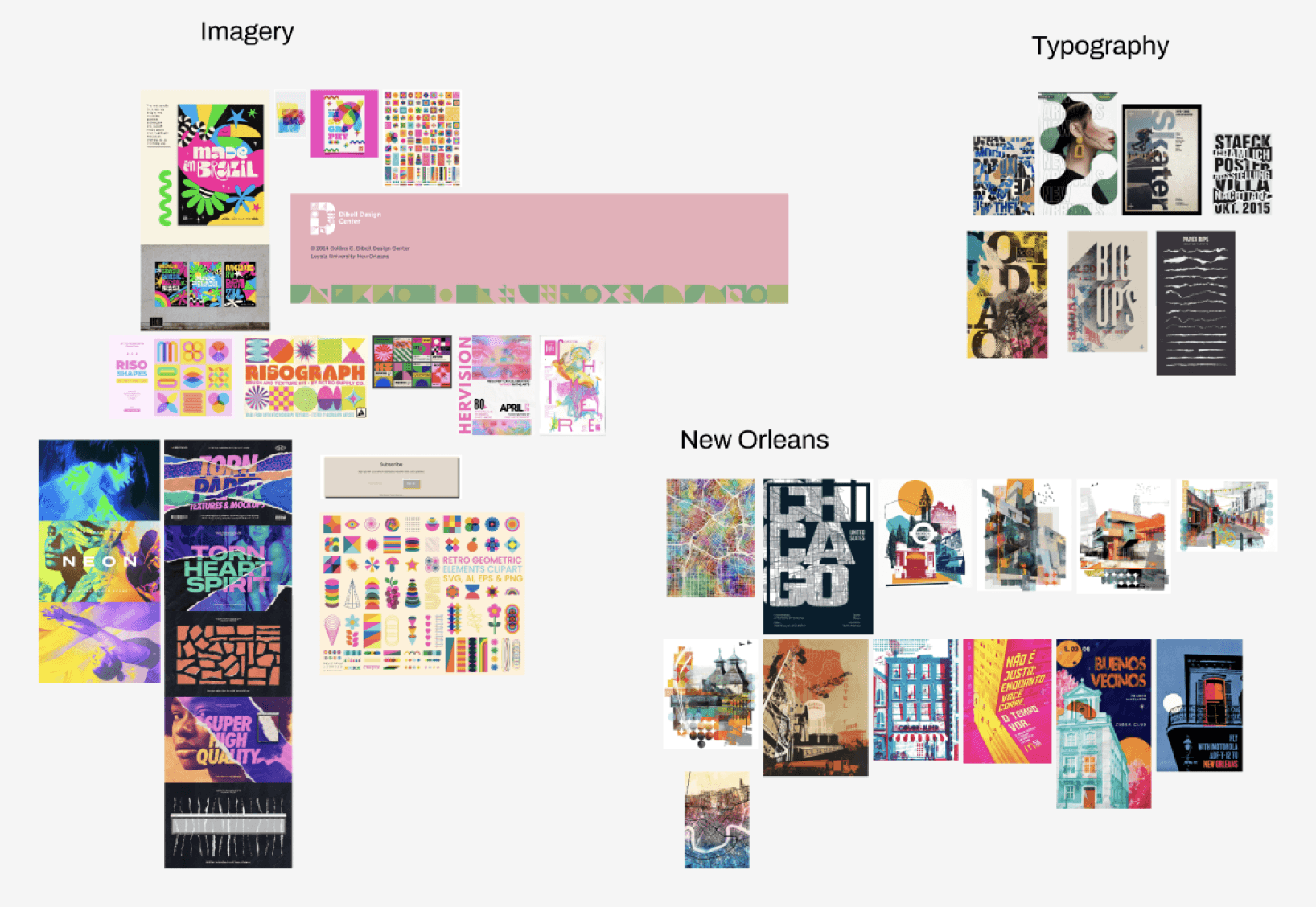
moodboard
The moodboard explored a balance between high-end contemporary design and playful, tactile expression. Drawing inspiration from riso prints, geometric patterns, and paper textures, it established a visual direction centered on layering, bold color, and materiality—capturing both the handcrafted nature of the products and the elevated tone the brand aimed to achieve.
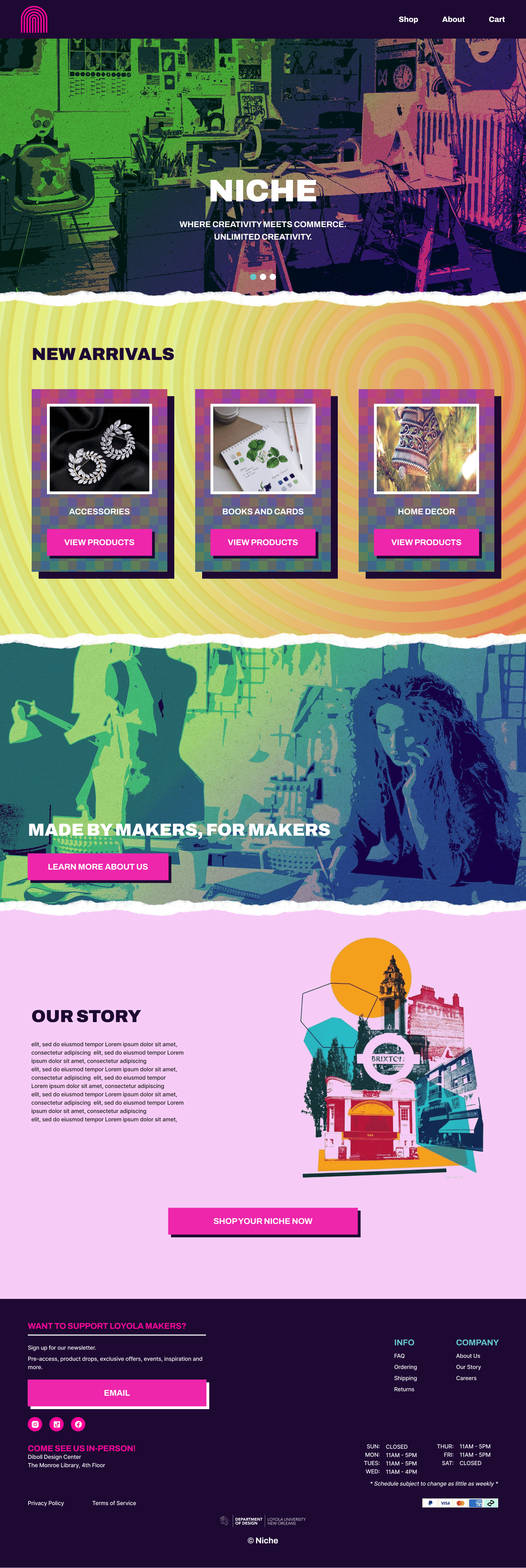
Round 1
I focused on establishing a bold visual identity using patterns, paper textures, and duotone imagery. While expressive, these elements often competed with products and reduced readability.
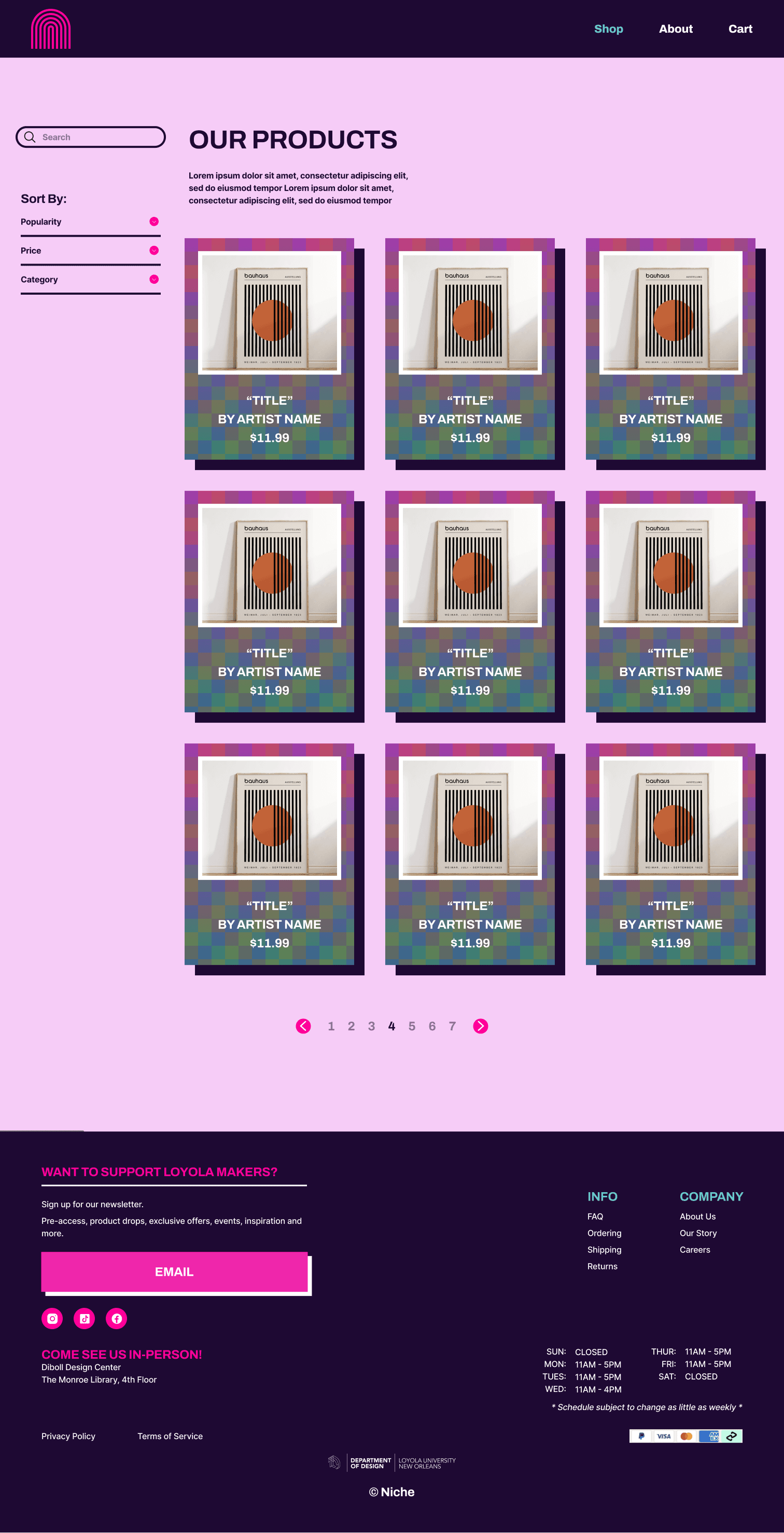
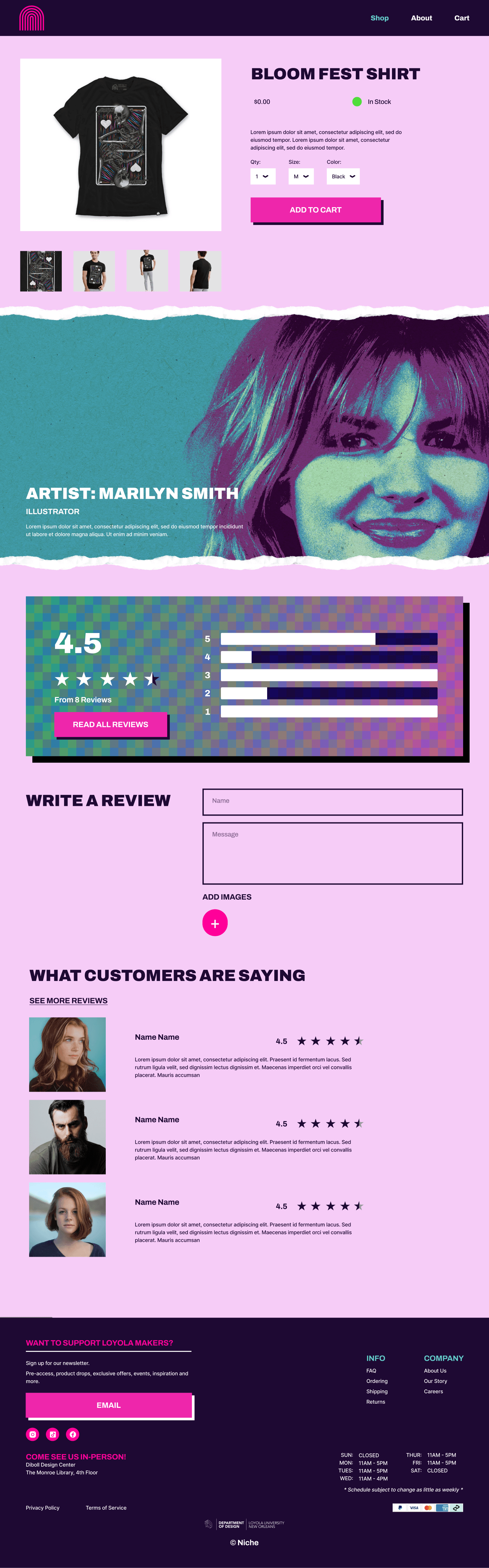
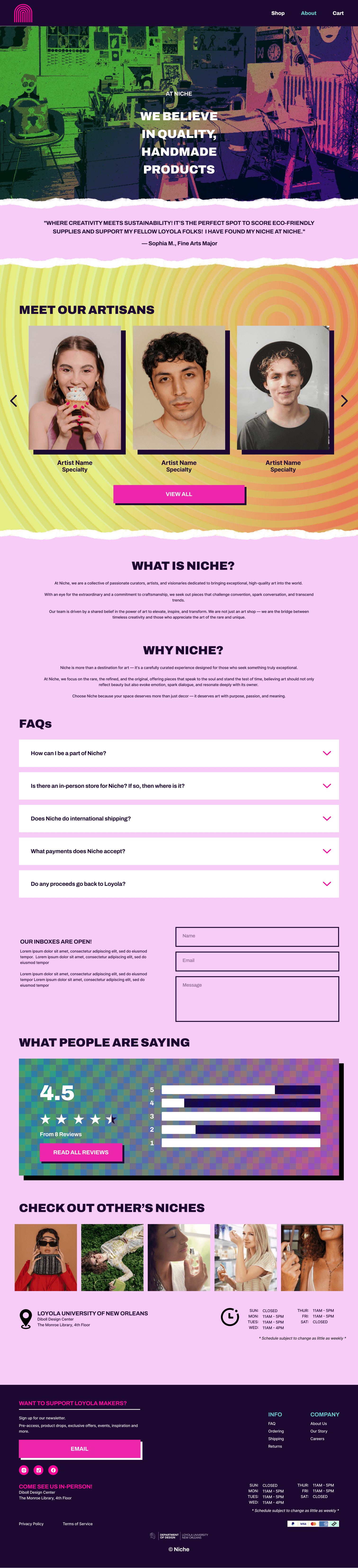
final
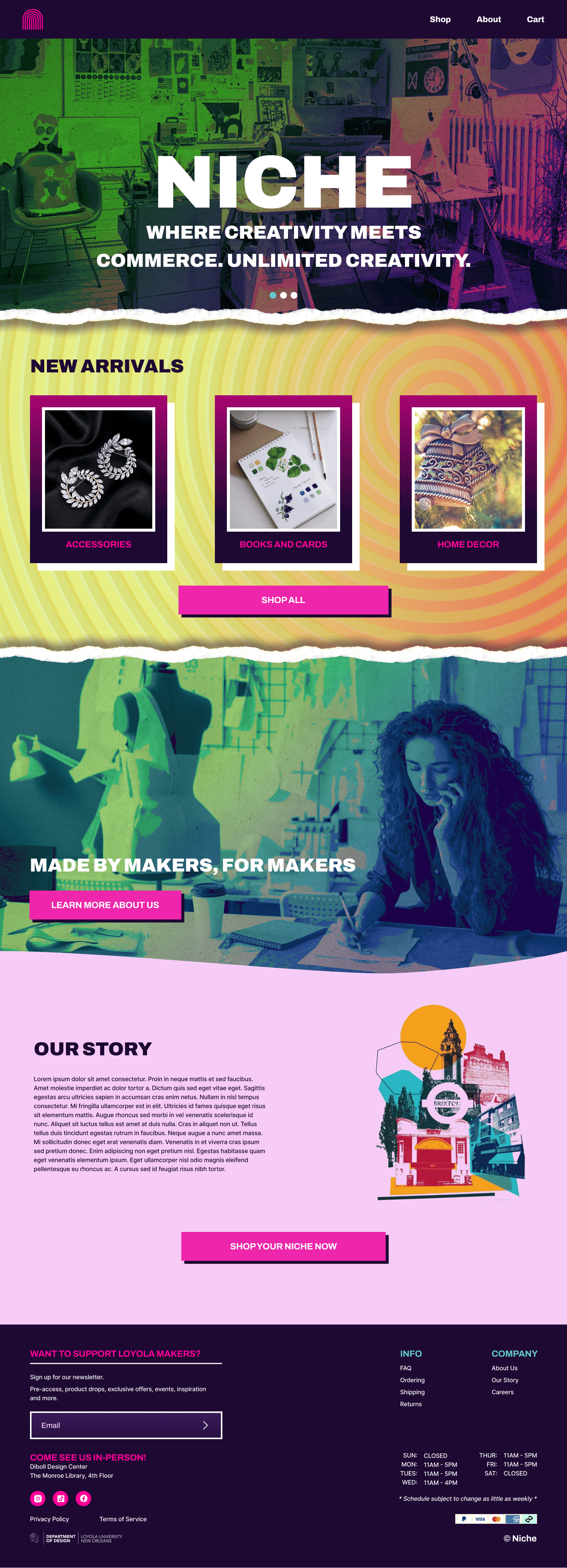
I shifted toward usability by removing patterns from key UI elements, introducing gradients, and improving layout structure. Final refinements reduced color saturation, integrated branding more subtly, and strengthened hierarchy while adding missing functional details.
Reflection
I learned that usability and clarity are more important than stylistic experimentation on mobile, and that strong systems and teamwork are essential for creating scalable, effective designs. Moving forward, I would prioritize responsiveness and establish a design system earlier to reduce rework and improve consistency.
What I learned
I don’t need to wait for perfect client input. Progress can happen with assumptions grounded in research.
E-commerce design requires balancing brand storytelling with maximizing sales.
What I'd Change
Explore a more modular system that could adapt if Niche became part of a larger Loyola site.
Push trust-building features further (e.g., richer artist storytelling, real user content).
Plan for project uncertainty, as the scope and outcomes can shift suddenly.
research findings
To explore opportunities related to Trader Joe's, I helped create and distribute a survey to 8 Loyola University New Orleans students, including one Trader Joe's crew member. Using the responses, my team conducted a thematic analysis to identify key insights.