
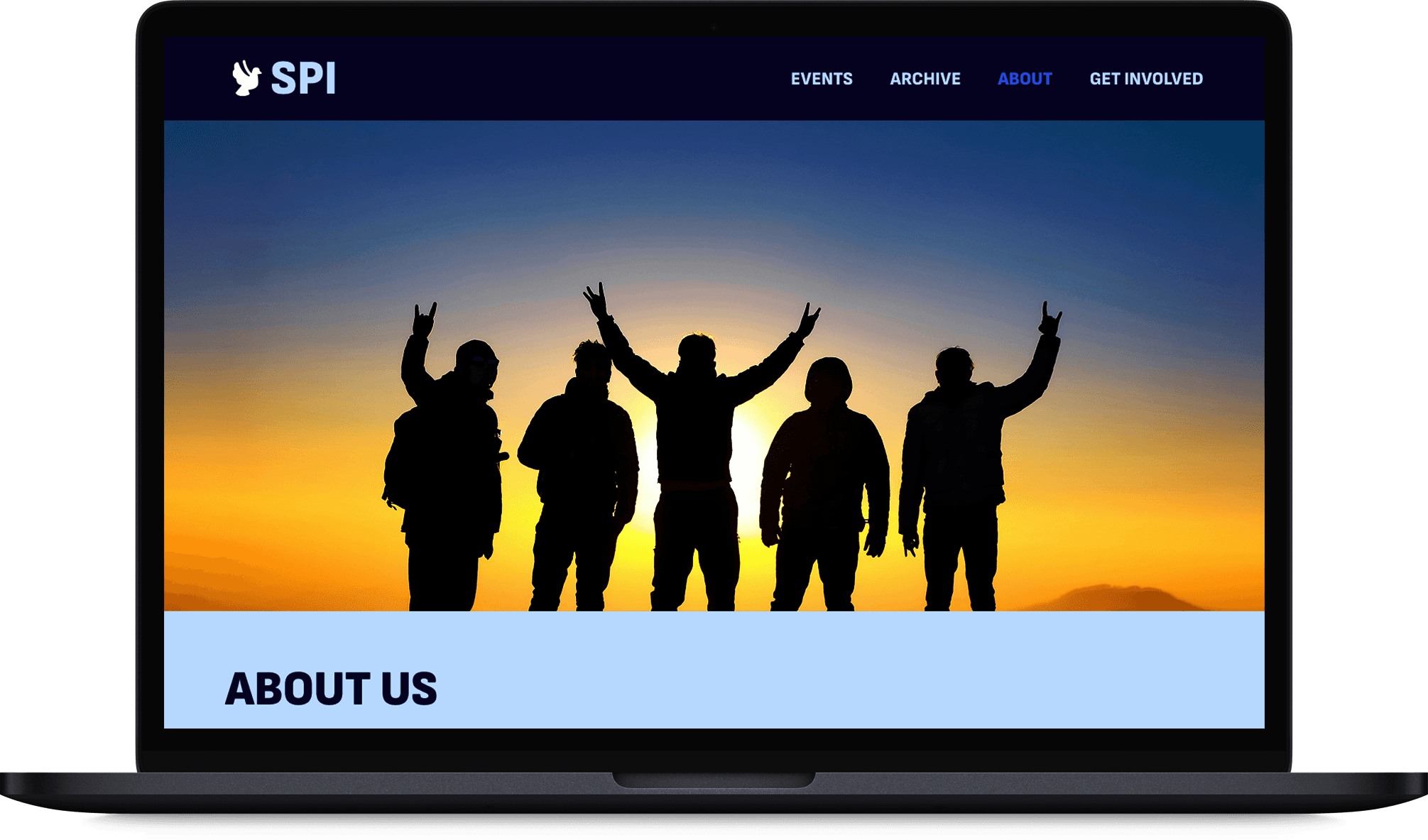
The problem
The Student Peace Initiative (SPI), a student-run organization at Loyola University New Orleans, needed a website to expand beyond campus and increase engagement with their journals and events. Their biggest challenge was encouraging abstract submissions while also communicating their identity, archiving past work, and distinguishing between their festivals and conferences.
research findings
After coming up with several key questions for our client, we made several important discoveries during our interview.
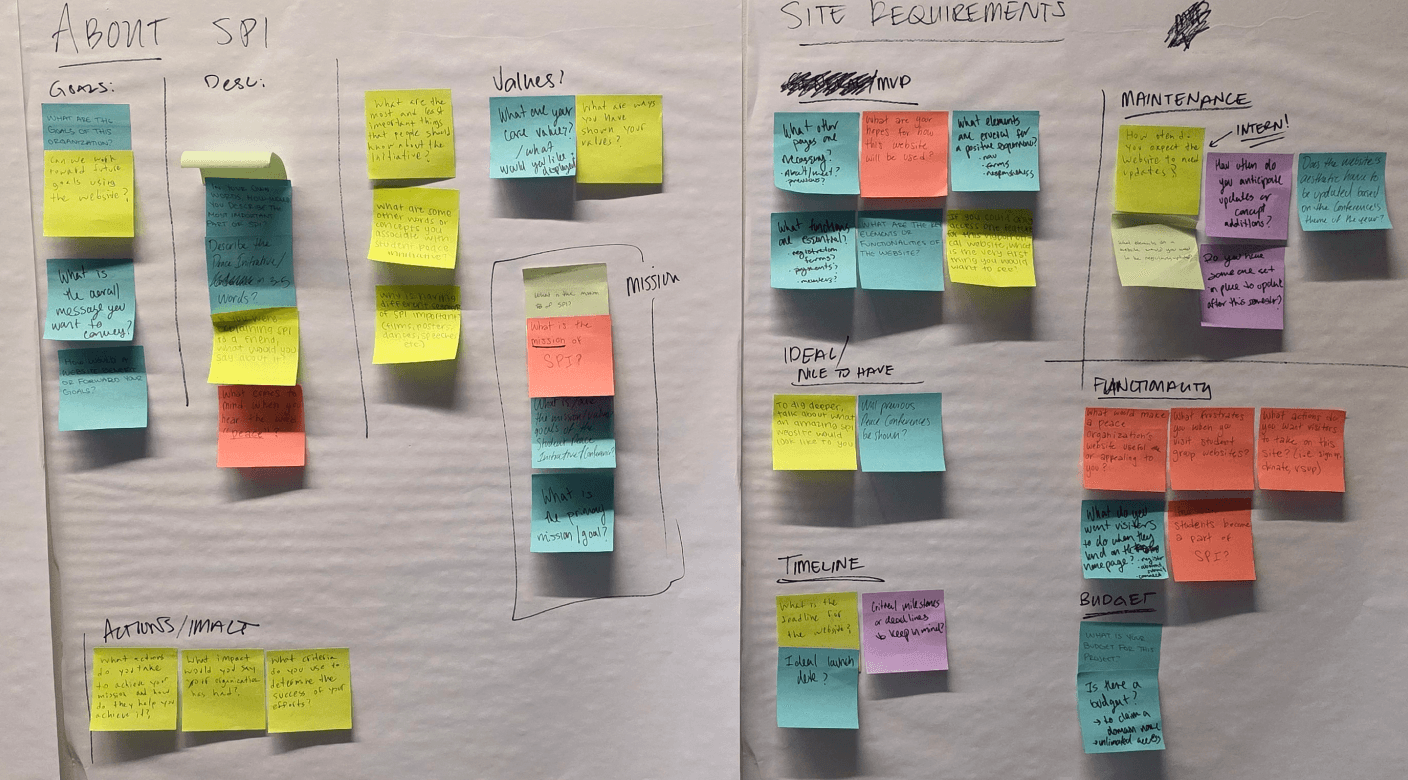
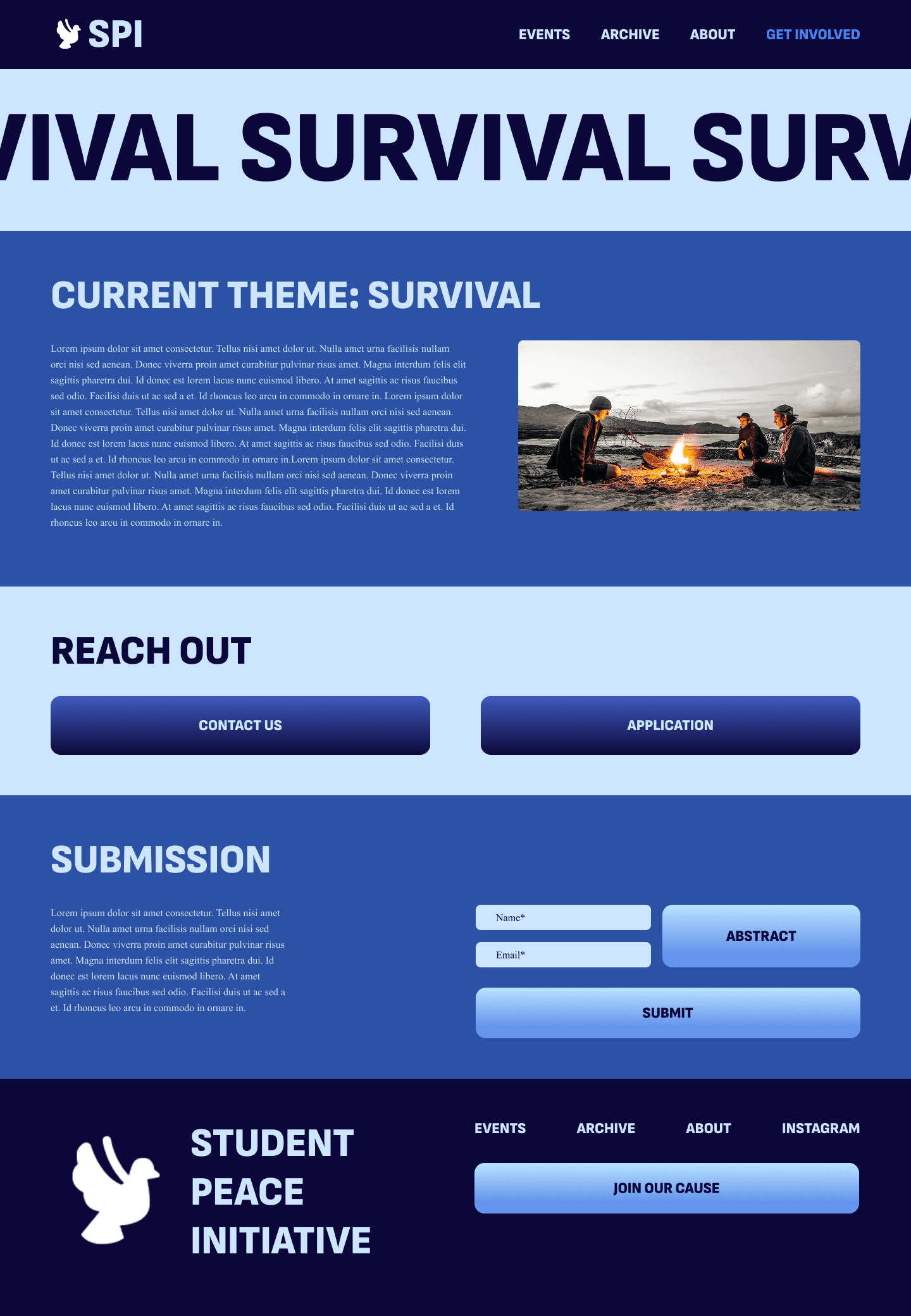
Abstract submissions were the top priority, making each semester’s theme essential to highlight.
Users were often confused between festivals and conferences, requiring clearer differentiation.
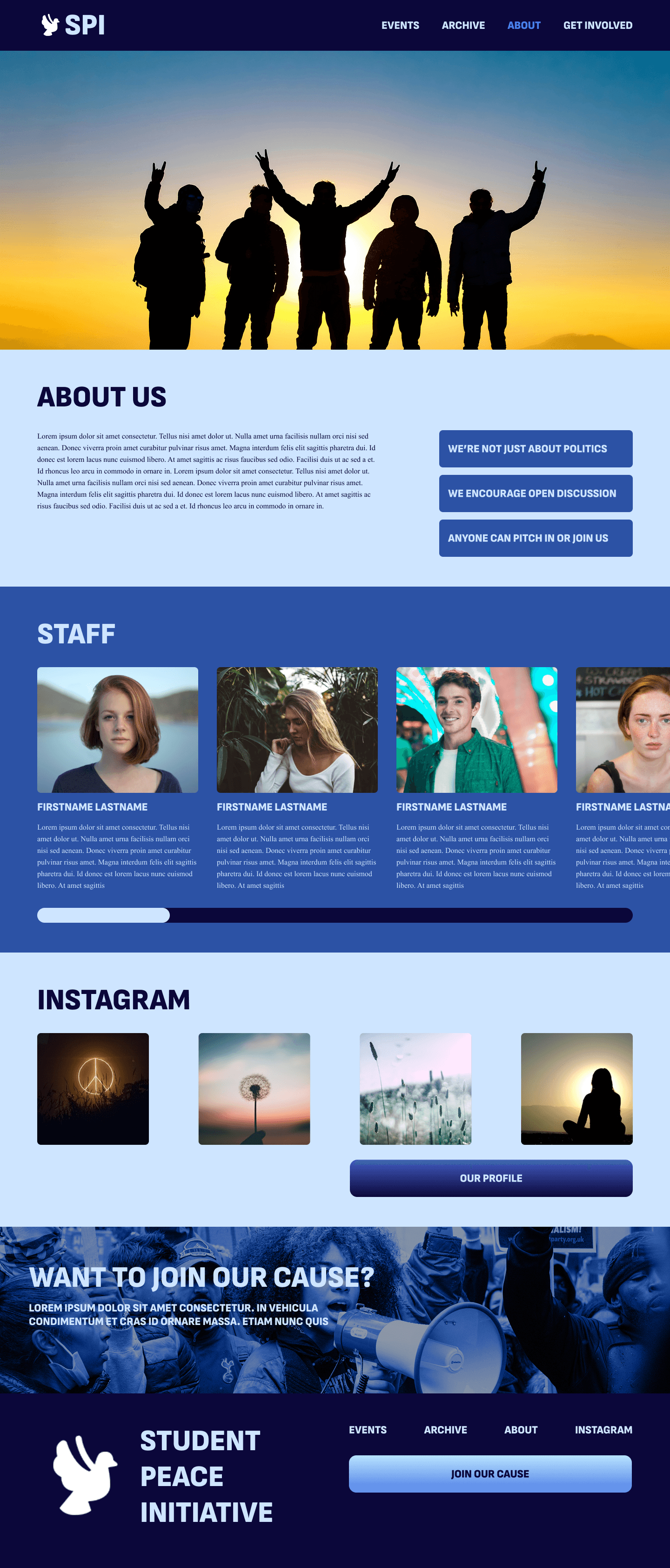
SPI needed to balance credibility and accessibility—showing impact while remaining open to all.
The organization wanted a distinct identity separate from Loyola, but was open to new branding directions.
SPI needed to balance credibility and accessibility—showing impact while remaining open to all.
Preferred bold, scrolling type to emphasize their influence
initial progress
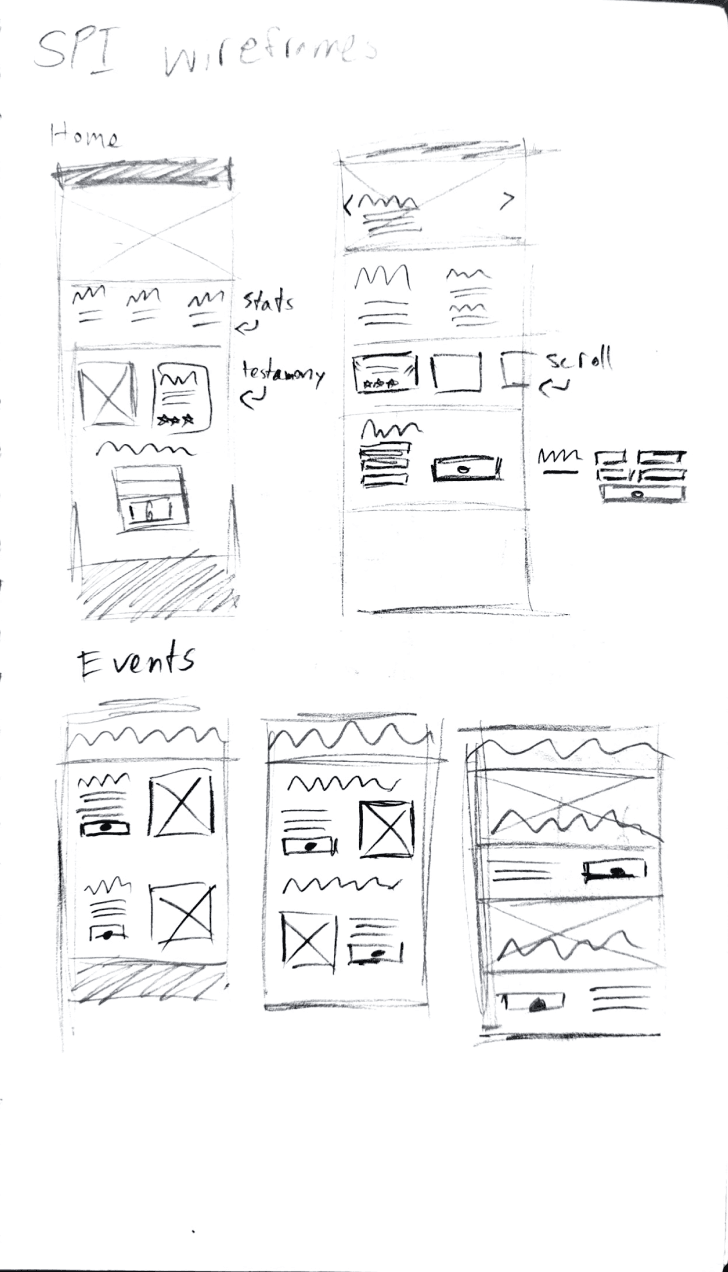
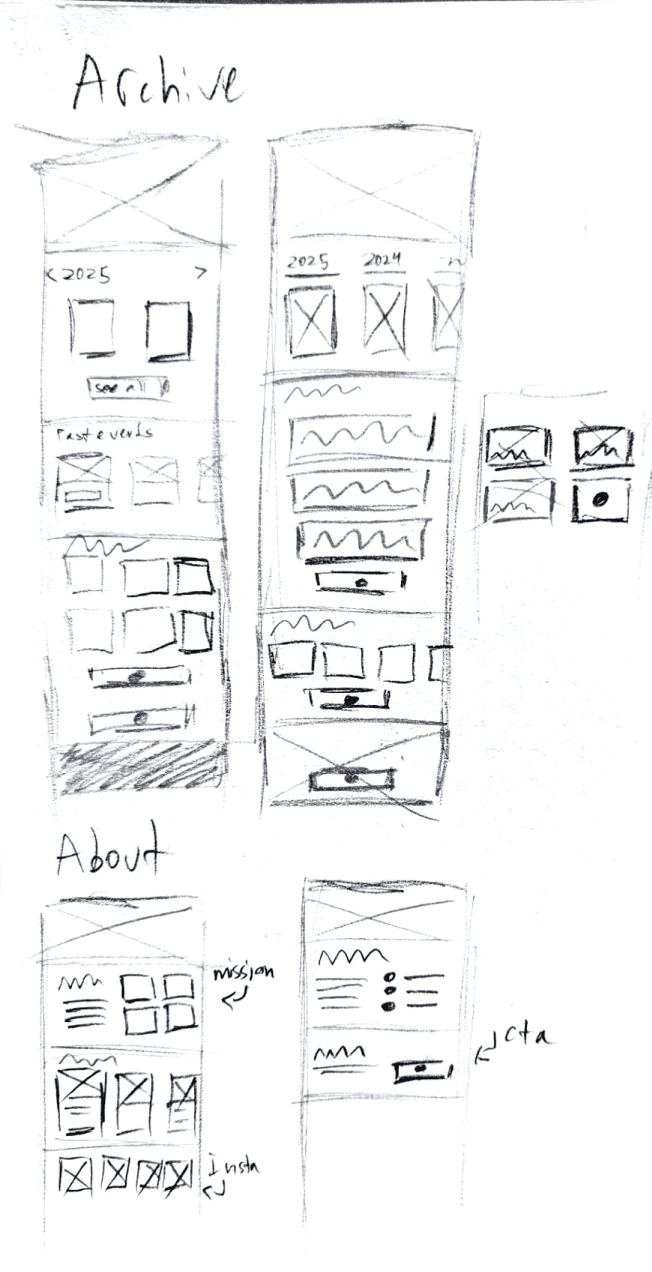
I began by focusing on how to communicate SPI’s impact and values early in the user experience. I explored ways to highlight their credibility through statistics and testimonies while keeping the interface inviting. At this stage, I also experimented with different layout structures and visual styles to determine how bold or minimal the interface should feel. These early explorations helped me define a direction that balanced clarity, engagement, and editorial aesthetics.
sketches
sitemap
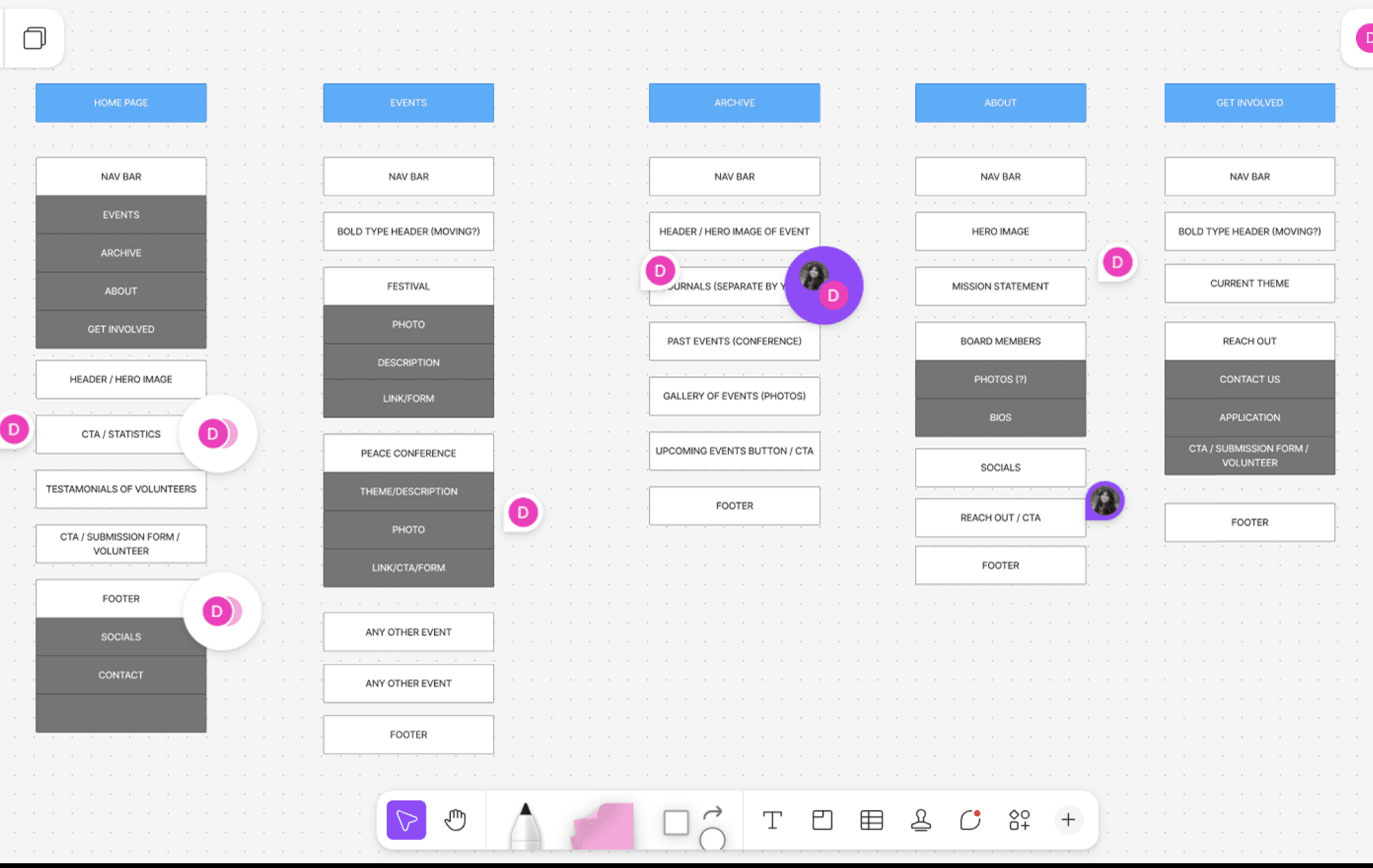
Our team created a site map to organize SPI’s content into a clear and scalable structure. We made sure that key pathways, such as submitting abstracts, were accessible from multiple points throughout the site.
wireframes
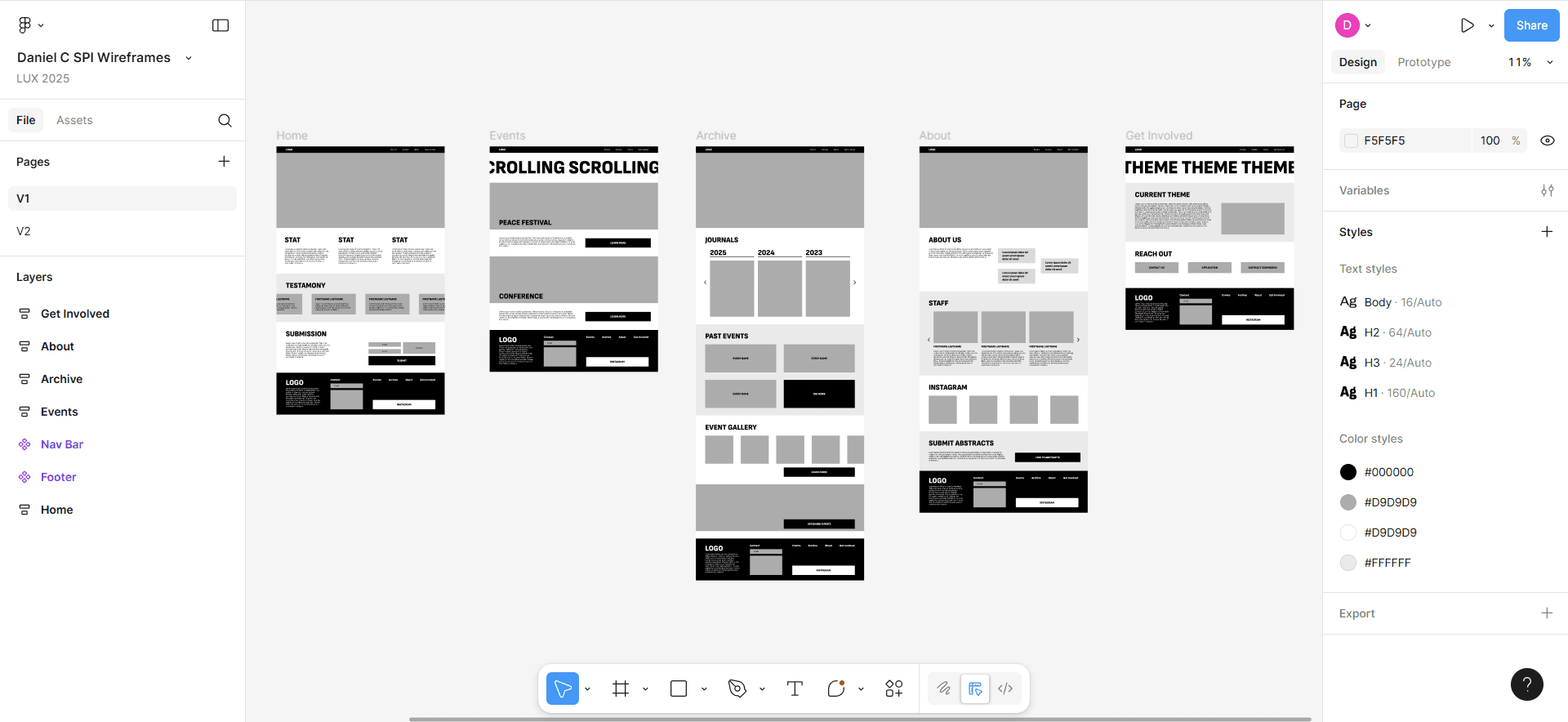
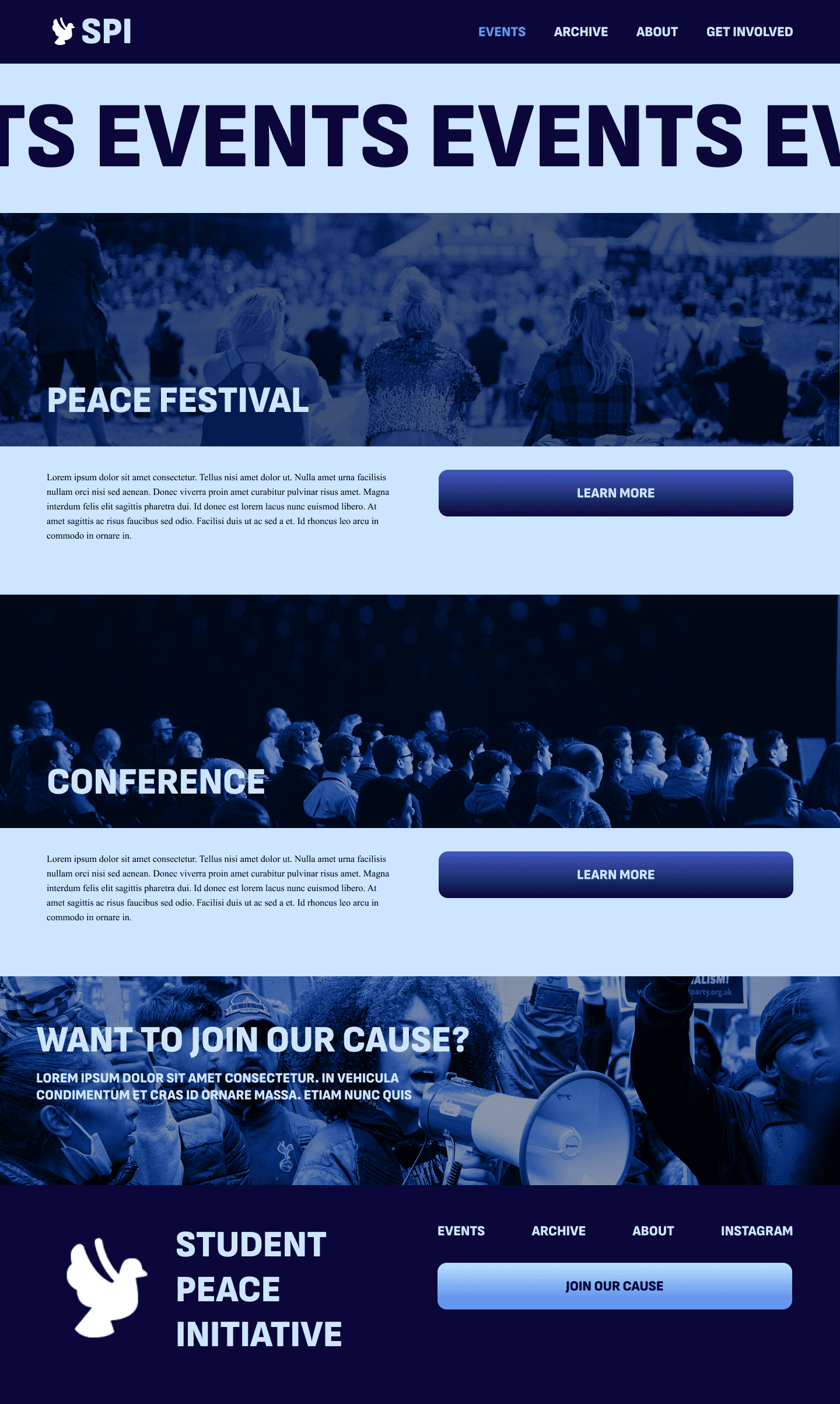
I developed wireframes to establish layout, hierarchy, and user flow before moving into visual design. I focused on placing key content, such as the semester theme and calls-to-action, in highly visible areas. I also structured the events page to clearly differentiate between festivals and conferences, addressing a major usability issue identified in research.
Round 1
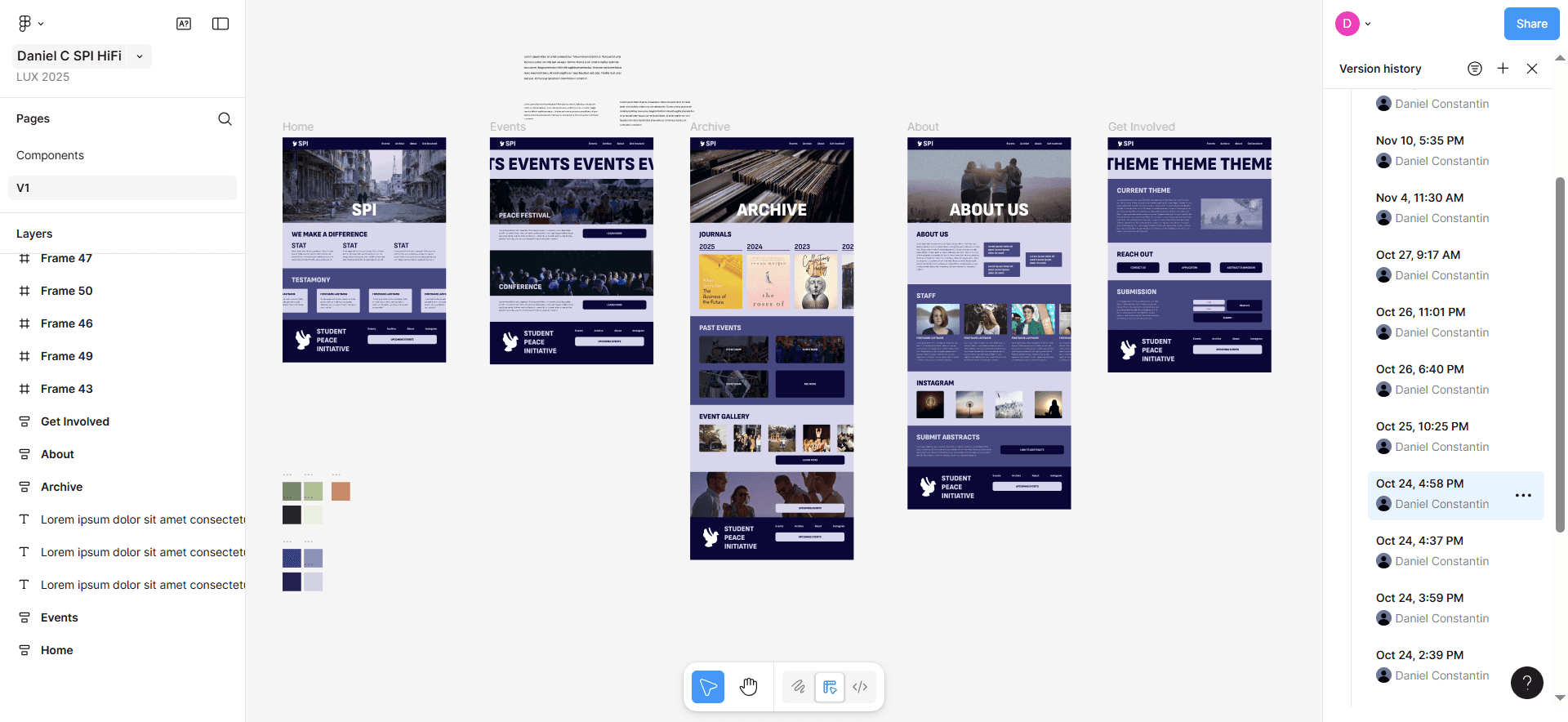
I approached the design by positioning SPI as both credible and approachable in order to drive engagement. I used a monochromatic blue palette to convey trust and unity, while creating a calm and welcoming tone. I incorporated an editorial-inspired layout to reflect SPI’s journal publications and emphasize written content. I also focused on establishing a clear content hierarchy that prioritized themes, events, and participation opportunities, ensuring users could quickly understand how to get involved.
features
The site features a theme-driven homepage, journal archive, clarified event structure, and strong calls-to-action designed to increase engagement and encourage abstract submissions.
Theme-forward homepage to spotlight each semester’s focus.
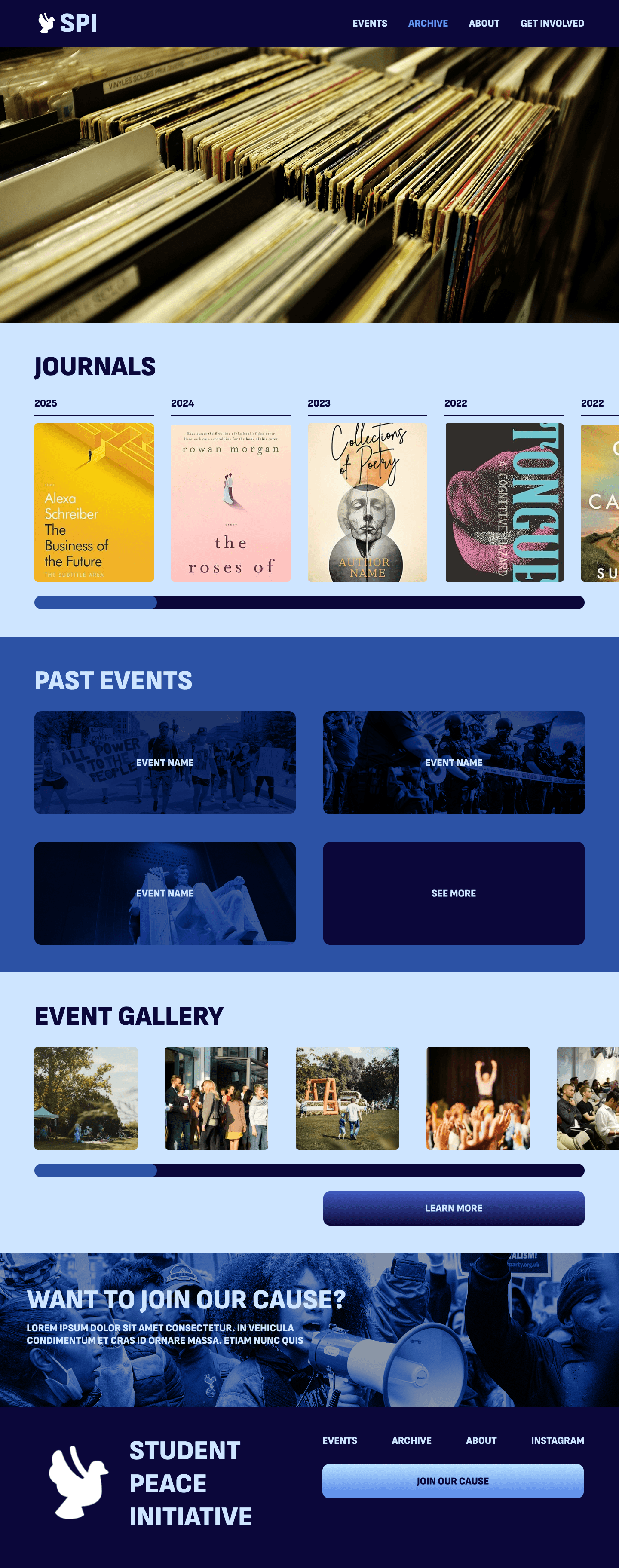
Journal archive with structured layouts for past publications.
Event pages clarifying differences between festivals and conferences.
Call-to-action sections driving users to “Get Involved” and submit abstracts.
Testimonies and statistics to reinforce credibility.
final version
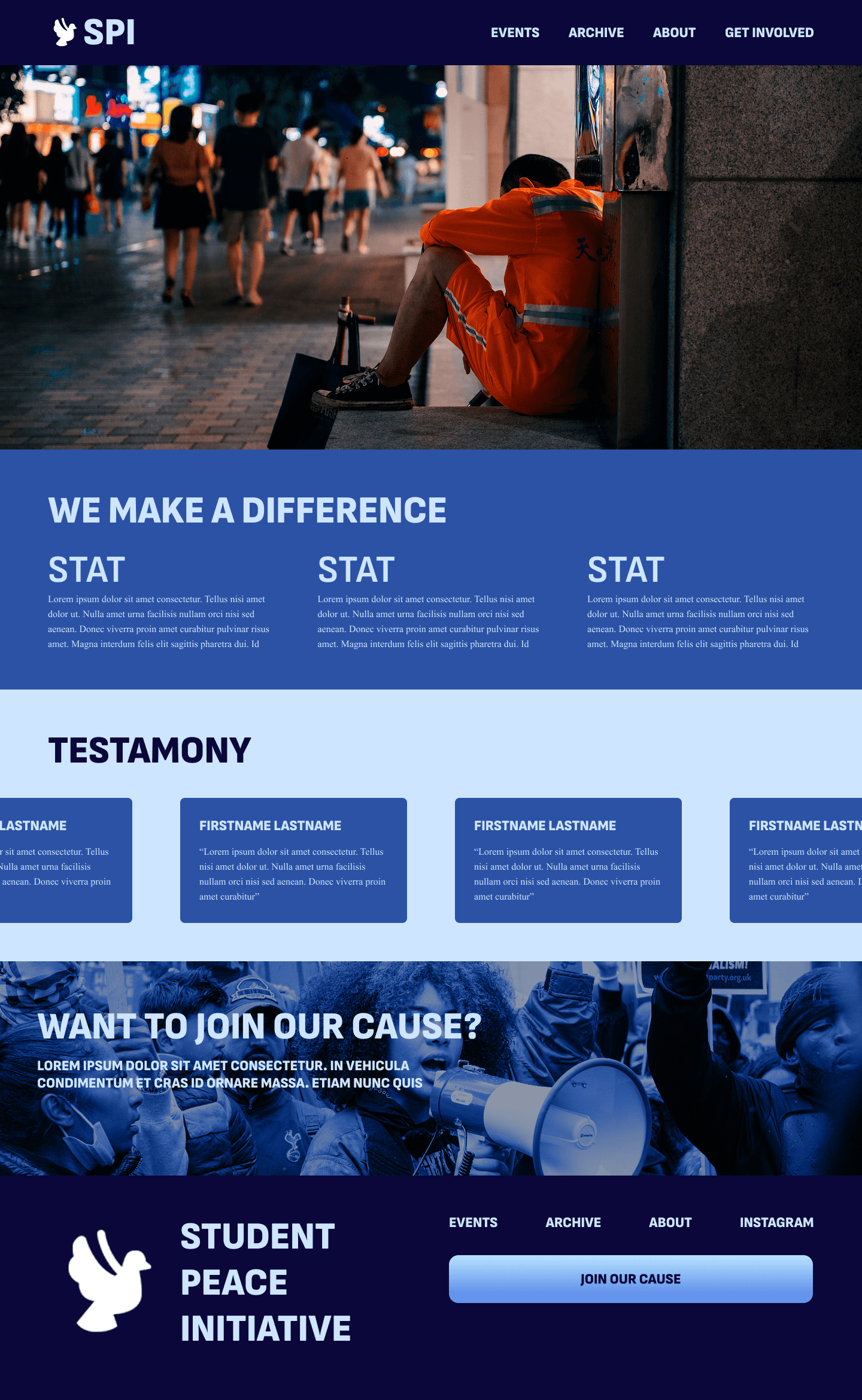
The final design included a theme-forward homepage that highlights each semester’s focus and encourages user engagement. I designed a journal archive to showcase past publications in a structured and readable format. The events section clearly differentiates between festivals and conferences to reduce confusion. I incorporated multiple calls-to-action that guide users to the Get Involved page and encourage abstract submissions. I also included testimonies and statistics to reinforce SPI’s credibility, along with Instagram integration to connect the website with ongoing activity.
Reflection
This project reinforced the importance of clear communication and early research in shaping effective design decisions. It also highlighted how aligning content strategy with visual design can create a more engaging and purposeful user experience.
What I learned
Visual choices, such as color and typography, can reinforce credibility and tone.
Early research directly informs both content strategy and visual design decisions.
What I'd Change
I would design and prototype a fully functional journal submission and archive system.
I would test the design with users to validate usability and engagement decisions.